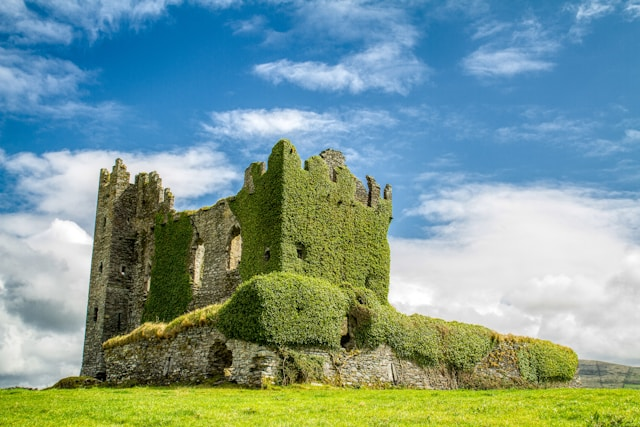
Ireland is one of those rare destinations that lives up to every romantic notion you've ever had about it — and then surprises you with something you never expected. This small island on the western edge of Europe is defined by its wild Atlantic coastline, impossibly green countryside, ancient ruins older than the pyramids, and a warmth of welcome that turns strangers into friends over a single pint. Whether you're tracing ancestral roots, chasing dramatic scenery, or simply looking for a country that knows how to have a good time, Ireland delivers.
Discover the Dramatic Landscapes
Ireland's west coast is where the landscape reaches its most breathtaking. The Cliffs of Moher in County Clare rise over 200 metres straight from the Atlantic, stretching for 14 kilometres along the coastline. Standing at the edge with the wind whipping off the ocean and seabirds wheeling below your feet is one of those moments that makes you understand why this is one of Europe's most visited natural attractions.
The Wild Atlantic Way, a 2,500-kilometre driving route that traces the entire western seaboard from Donegal in the north to West Cork in the south, is one of the world's great coastal road trips. Every stretch reveals something new — the lunar limestone landscape of the Burren, the towering sea stacks of County Kerry, the wild beaches of Connemara, and the remote headlands of Donegal where you can drive for an hour without seeing another car.
The Ring of Kerry is a classic circuit through some of the country's most celebrated scenery. Lakes, mountains, and coastline combine in a landscape that shifts from pastoral farmland to rugged Atlantic shores within minutes. For a quieter alternative, the nearby Dingle Peninsula offers equally stunning views with a fraction of the crowds, plus the charm of Dingle town itself — a colourful harbour village with traditional music in every pub.
In the north, the Giant's Causeway in County Antrim is a geological wonder — roughly 40,000 interlocking basalt columns formed by ancient volcanic activity, creating a staircase that looks like it was carved by mythical hands. Legend says the giant Fionn mac Cumhaill built it as a pathway to Scotland, and standing among those perfectly hexagonal stones, the myth feels more convincing than the science.
Step Into Living History
Ireland's history runs deep, and it's woven into every corner of the landscape. Newgrange in County Meath is a 5,200-year-old passage tomb — older than Stonehenge, older than the Egyptian pyramids — aligned so precisely that sunlight floods its inner chamber only during the winter solstice. The craftsmanship is astonishing, and visiting the site is a powerful reminder that sophisticated civilisation flourished here millennia before written records began.
The monastic settlement of Glendalough in County Wicklow sits in a glacial valley surrounded by forested hills and still lakes. Founded in the sixth century by St Kevin, the ruins include a near-perfect round tower, stone churches, and Celtic crosses — all set in scenery so peaceful it's easy to see why monks chose this spot for contemplation.
In the cities, history takes on a more recent and sometimes painful dimension. Dublin's Kilmainham Gaol tells the story of Ireland's struggle for independence, with guided tours that bring the events of 1916 and beyond to vivid life. The Titanic Belfast museum in Northern Ireland is a world-class experience built on the very slipway where the ill-fated liner was constructed, telling a story far richer and more nuanced than most visitors expect.
Embrace the Culture and Craic
Ireland's cultural identity is inseparable from its music, literature, and social traditions. Traditional Irish music — or trad — is best experienced live in a pub session, where musicians gather informally to play fiddles, tin whistles, bodhrán drums, and uilleann pipes. Galway, Doolin, Dingle, and Ennis are legendary for their trad scenes, but you'll find sessions in pubs across the country, often unannounced and always welcoming.
Dublin's literary heritage is extraordinary for a city its size. James Joyce, Oscar Wilde, Samuel Beckett, W.B. Yeats — the list of world-changing writers who called Dublin home is remarkable. The Book of Kells at Trinity College, an illuminated manuscript dating from around 800 AD, is one of the most beautiful objects ever created by human hands.
The concept of craic — that untranslatable combination of fun, conversation, and good company — is central to Irish social life. It's the reason a quick drink in a country pub can turn into a four-hour conversation with people you've never met. It's why festivals pop up in the smallest villages. And it's the quality that visitors remember long after the scenery fades from memory.
Taste the Food and Drink
Irish food has undergone a quiet revolution. The days of boiled everything are long gone, replaced by a culinary scene built on exceptional local ingredients. Irish butter and dairy are genuinely among the best in the world — there's a reason Kerrygold is a global export. Grass-fed beef and lamb from the lush pastures, Atlantic seafood pulled fresh from the ocean, and farmhouse cheeses from small producers across the country form the backbone of a food culture that's confident and unpretentious.
The seafood along the west coast is outstanding. Galway's oyster festival is a highlight of the Irish food calendar, but you don't need a festival to enjoy them — order a dozen with a pint of Guinness in any coastal town and you've found one of Ireland's finest simple pleasures. Smoked salmon from the Burren Smokehouse, chowder thick with mussels and prawns, and fresh crab from the piers of West Cork are all worth travelling for.
And then there's the whiskey. Irish whiskey has experienced a remarkable resurgence, with distilleries old and new producing spirits that rival and often surpass their Scottish neighbours. Visit the Jameson Distillery in Midleton, explore newer craft operations like Dingle Distillery or Teeling in Dublin, or simply order a glass of Redbreast 12 by a turf fire and let the evening take care of itself.
Stay Connected With BazTel
Ireland's charm often lies in its most remote corners — clifftop walks, country lanes, and coastal villages far from major towns. Reliable mobile data ensures you can navigate those winding roads, check weather before a hike along the Atlantic coast, find the pub with tonight's trad session, or share a photo of that perfect Connemara sunset without hunting for Wi-Fi.
BazTel offers travel eSIMs covering 160+ countries, including Ireland. With Irish eSIM data plans starting from just $1, staying connected doesn't have to cost more than a cup of tea. There are no physical SIM cards to swap, no apps to download, and no QR codes — BazTel's one-click dashboard installation gets you online in moments. Visit baztel.co to set up your plan before you travel.
With data ready from the moment you arrive, you can pull up walking routes on the Wild Atlantic Way, check opening times for castles and distilleries, translate the odd Irish-language road sign, and keep friends and family updated on your adventures without a second thought.
Plan Your Trip
Ireland is wonderfully compact — you can drive from Dublin to the west coast in under three hours — but it rewards a slower pace. Rushing through it means missing the magic, which often happens in the unscripted moments: a rainbow breaking over a ruined abbey, a farmer stopping to chat at a crossroads, or a pub session that runs until the small hours on a Tuesday night.
A week gives you a solid taste of either the west coast or a combination of Dublin and the south. Two weeks lets you explore both coasts comfortably. Rent a car for the countryside — public transport thins out quickly beyond the cities — and don't be afraid to abandon the itinerary when something catches your eye. In Ireland, the detour is almost always better than the plan.