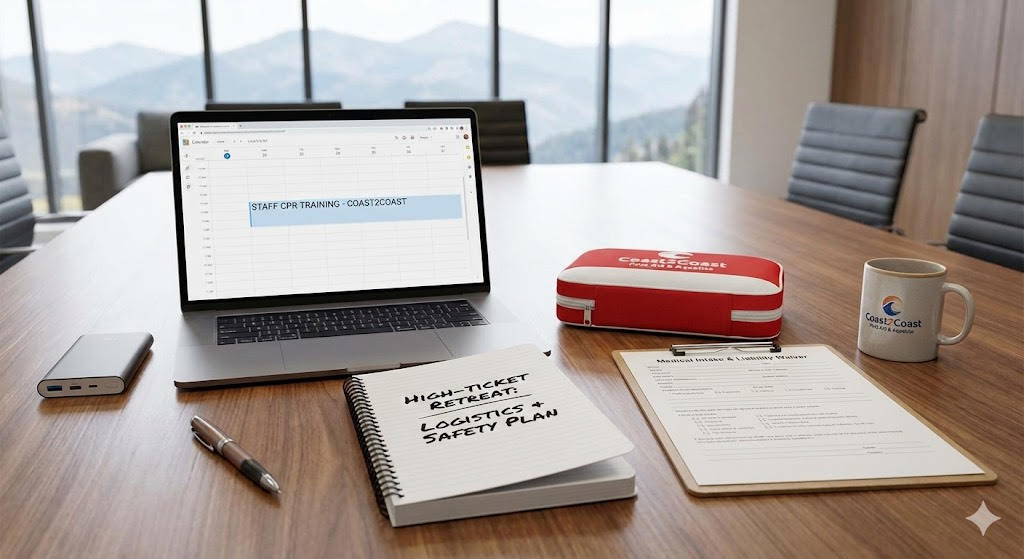
For digital creators, the ultimate scaling strategy often isn't another PDF download or video module—it’s the "In-Person Experience." Whether it’s a yoga retreat in Banff, a business mastermind in Toronto, or a specialized workshop in Edmonton, bringing your community together in the real world builds loyalty like nothing else.
But moving from "Zoom to the Room" introduces a layer of complexity that most edupreneurs aren't ready for: Duty of Care.
When students are behind a screen, your liability is limited. When they are in your venue, under your supervision, their safety becomes your business. If you are planning to host a live event this winter or spring, here is how to protect your brand, your students, and your bottom line.
1. Vetting the Venue Beyond the Aesthetics
We all want that Instagram-worthy backdrop. A rustic cabin, a converted industrial loft, or a boutique hotel conference room looks great on a sales page. However, as the event organizer, you need to look past the aesthetics.
- Accessibility: Can all your students physically access the space?
- Emergency Exits: Are they clearly marked and unblocked?
- Connectivity: Is there reliable phone service in case of an emergency?
If you are booking a non-traditional venue (like a private Airbnb or a warehouse space), you don't have the safety net of hotel staff. You are the staff.
2. The "Medical Preparedness" Clause
You ask your students for their dietary restrictions, but do you ask about their medical conditions?
For high-ticket retreats, especially those involving physical activity or travel, you should include a medical intake form. Knowing that an attendee has a severe allergy or a heart condition allows you to prepare.
This leads to the most critical—and often overlooked—step: Staff Training.
Imagine a worst-case scenario: A student collapses during a session, or slips on an icy walkway outside your venue. Do you know what to do? The last thing you want is to be helpless while waiting for an ambulance.
For creators hosting events in major hubs, it is standard practice to have at least one team member certified. For example, if your next event is in Alberta, sending a staff member to Coast2Coast First Aid Edmonton ensures you have a designated safety lead on the ground. It’s a small investment that drastically lowers your liability risk.
3. Why You Should Learn Skills Yourself
As the face of your brand, your leadership is tested during a crisis. If an emergency happens, your community will look to you for direction.
Panic destroys trust. Competence builds it.
Taking the time to learn CPR and basic first aid isn't just about ticking a compliance box; it’s about duty of care. It signals to your high-paying clients that you value their well-being enough to be prepared. Plus, in the context of a multi-day retreat, having these skills allows you to handle minor issues (cuts, burns, sprains) without derailing the entire schedule.
4. Insurance: The boring but Necessary Part
Never host an in-person event without "Event Liability Insurance."
Many creators assume their general business liability covers off-site events. It often does not. If a student trips over a camera tripod or gets food poisoning from the caterer, you could be personally liable.
Contact your broker and ask specifically about "Special Event Coverage." It is usually affordable (often under $200 for a weekend) and covers bodily injury and property damage.
5. Create an Emergency Action Plan (EAP)
You have a run-of-show for your content; you need one for emergencies too.
- Who calls 911? Designate one person.
- Who manages the other students? Someone needs to keep the group calm and move them away from the scene.
- Where is the nearest hospital? Google this before you arrive.
Final Thoughts: Authority comes from Responsibility
Your students buy your courses because they trust your expertise. When you invite them into your physical space, that trust extends to their physical safety.
By handling the logistics of safety—vetting venues, securing insurance, and ensuring you or your team are trained—you aren't being paranoid. You are being a professional.
So, go ahead and book that venue. Plan that transformation. Just make sure you are as prepared for the "what ifs" as you are for the keynote.