A cracked phone screen is one of the most common smartphone problems. While many people choose to visit a repair shop, others prefer to handle the repair themselves. Replacing a phone screen is possible with the right knowledge, patience, and proper equipment. Using the correct tools not only makes the process easier but also reduces the risk of damaging other internal components.
Whether you are replacing a broken display or learning basic repair skills, understanding which tools to use is the first step toward a successful repair. From opening the device safely to separating the display and installing a replacement, every stage requires the right equipment.
Why Quality Repair Tools Make a Difference
Modern smartphones are built with strong adhesives, delicate flex cables, and compact internal components. Trying to open a device with household tools often leads to scratched frames, damaged connectors, or broken displays.
Professional repair technicians use specialized equipment because it improves accuracy and makes every repair more efficient. Even if you only repair a few phones each year, investing in reliable tools can save both time and money while helping you achieve better results.
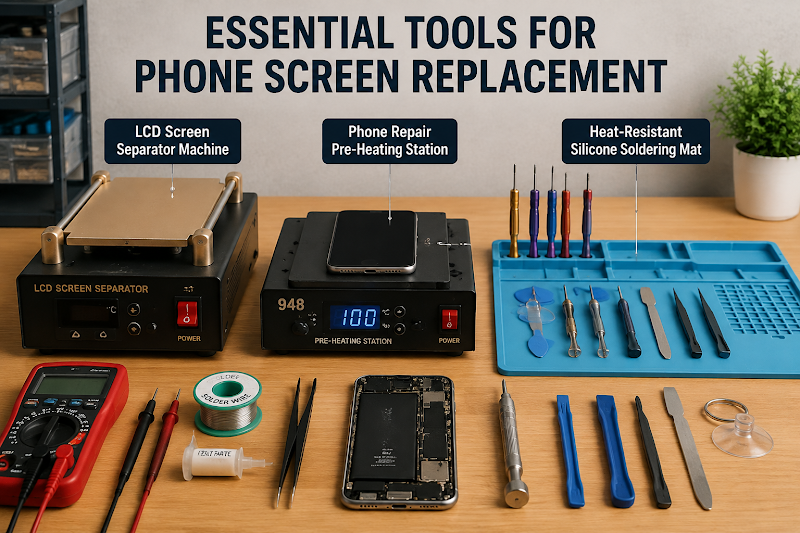
1. LCD Screen Separator Machine
One of the most valuable tools for display replacement is an LCD Screen Separator Machine. Modern smartphone screens are attached with strong adhesive that can be difficult to remove without controlled heat and steady support.
This equipment helps loosen the adhesive evenly, making it easier to lift the damaged display while reducing unnecessary pressure on the glass. Instead of forcing the screen off by hand, the separator creates a more controlled repair process.
Many repair professionals also consider this type of equipment an important part of their phone screen repair machine setup because it helps improve efficiency while reducing the chances of accidental damage during screen removal.
2. Phone Repair Pre-Heating Station
Before attempting to remove a screen, technicians often warm the device using a Phone Repair Pre-Heating Station. Gentle and even heating softens the factory adhesive without exposing the phone to excessive temperatures.
Unlike applying random heat with basic tools, a dedicated pre-heating station provides more consistent results. This makes the screen easier to remove while protecting sensitive internal components.
Using controlled heat before opening a phone can also reduce the amount of force needed during the repair, making the entire process safer for both beginners and experienced technicians.
3. LCD Screen Opening Tools
Once the adhesive has softened, the next step is carefully opening the phone. This is where LCD screen opening tools become essential.
These tools usually include suction cups, plastic opening picks, nylon pry tools, and precision spudgers. Together, they help separate the display from the frame without scratching the housing or damaging fragile cables underneath.
Plastic opening tools are often recommended because they are gentle on the device while still providing enough flexibility to work around the edges of the display.
Working slowly with the proper opening tools greatly increases the chances of completing a successful repair without creating additional problems.
4. Screen Separator Machine
A screen separator machine plays an important role when dealing with tightly bonded displays. Smartphones use high-strength adhesive to keep screens securely attached, which makes manual removal difficult.
By combining controlled heat with vacuum support, the machine allows the display to separate more smoothly. This minimizes stress on the glass and helps maintain better control throughout the repair.
Repair technicians who regularly replace screens often rely on a screen separator machine because it speeds up the repair process while improving consistency.
5. Screen Refurbishing Tools
Not every damaged screen needs to be thrown away. In many situations, professional technicians restore working displays using specialized screen refurbishing tools.
These tools help remove broken glass, clean adhesive residue, prepare display assemblies, and complete refurbishment work before reassembly.
For repair businesses, screen refurbishing tools provide an opportunity to restore compatible displays instead of replacing the entire assembly, helping reduce costs while maintaining quality repairs.
Although advanced refurbishment requires practice, understanding these tools gives beginners a better appreciation of how professional repair centers restore damaged screens.
6. Heat-Resistant Silicone Soldering Mat
A clean workspace is just as important as the repair tools themselves. A Heat-Resistant Silicone Soldering Mat provides a stable surface that protects your workbench while keeping small screws and components organized.
Many silicone repair mats include separate compartments for tiny parts, making it much easier to remember where every screw belongs during reassembly.
Because smartphones contain many small components, staying organized throughout the repair helps prevent mistakes and reduces the chance of losing important parts.
Additional Helpful Repair Equipment
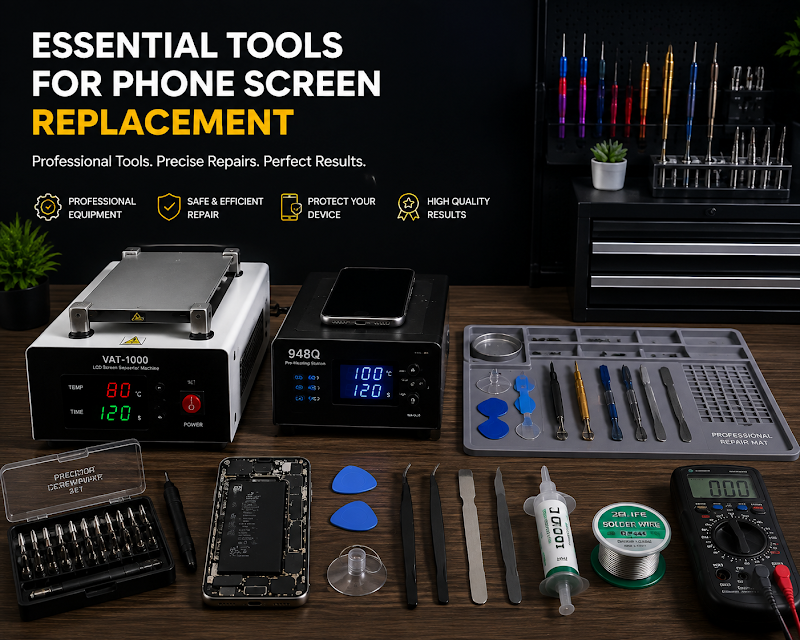
Along with specialized machines, several basic tools are useful for nearly every repair:
- Precision screwdriver set for different screw types.
- Fine-tip tweezers for handling small connectors.
- Isopropyl alcohol for cleaning adhesive residue.
- Microfiber cloths to remove dust before installing the new display.
- Magnetic trays to organize screws during disassembly.
Using quality accessories alongside your phone screen repair machine creates a more efficient repair environment and improves overall results.
Tips for a Successful DIY Screen Replacement
Before beginning any repair, completely power off the phone. If possible, disconnect the battery before working on other internal components.
Work in a clean, well-lit area where small screws cannot easily be lost. Keep each component organized as you remove it, and avoid rushing through any step.
Always use compatible replacement parts and inspect every connector before sealing the device. Taking a few extra minutes during installation can prevent problems after the phone is reassembled.
If this is your first repair, practice patience. Most successful screen replacements are completed slowly rather than quickly.
Conclusion
Replacing a damaged phone screen becomes much easier when you have the proper equipment. An LCD Screen Separator Machine helps remove displays safely, while a Phone Repair Pre-Heating Station softens adhesive for easier disassembly. Reliable LCD screen opening tools protect delicate components during removal, a screen separator machine improves repair efficiency, and professional screen refurbishing tools support advanced display restoration. Completing the repair on a Heat-Resistant Silicone Soldering Mat also keeps your workspace organized and protects valuable components.
Whether you are repairing your own smartphone or developing professional repair skills, using the right tools will improve both the repair experience and the final result.